These next two weeks, we’ll focus on story building for pragmatic and social communication. Ding-ding-ding. Yes, we’re dealing with autistic children. The first of the two is 11 years old – we’ll call him Munch.
Munch is not your classic representation of autism. He participates in a general education environment, is generally friendly and talkative, usually knows what to say in social exchanges. It takes a while to realize why this diagnosis even makes sense for him. Upon initially seeing him, I figured literacy would be our biggest hurdle – and it is, to a degree. In addition to this, however, I’ve realized some difficulty with figurative language and understanding humor. He has notably increased anxiety when looking forward to a new situation and may aggressively overthink the possibilities of such a situation.
Anyway, in lieu of the pragmatic portion of our therapy, Munch and I have been working on story-building. This comes from a place of concern his family communicated in which Munch would be unable to report things that happened at school – even if he came back and had a cut or bruise, he wouldn’t be able to tell the story leading to what happened maybe beyond “I fell.”
Well, as a family that wants to protect and advocate for their child, story telling became an important goal. In therapy, we have covered the importance of substance and identifying important details that lead to listener understanding.
Given a situation picture card, Munch was able to come up with an introduction, a problem, and a solution. Questions that helped:
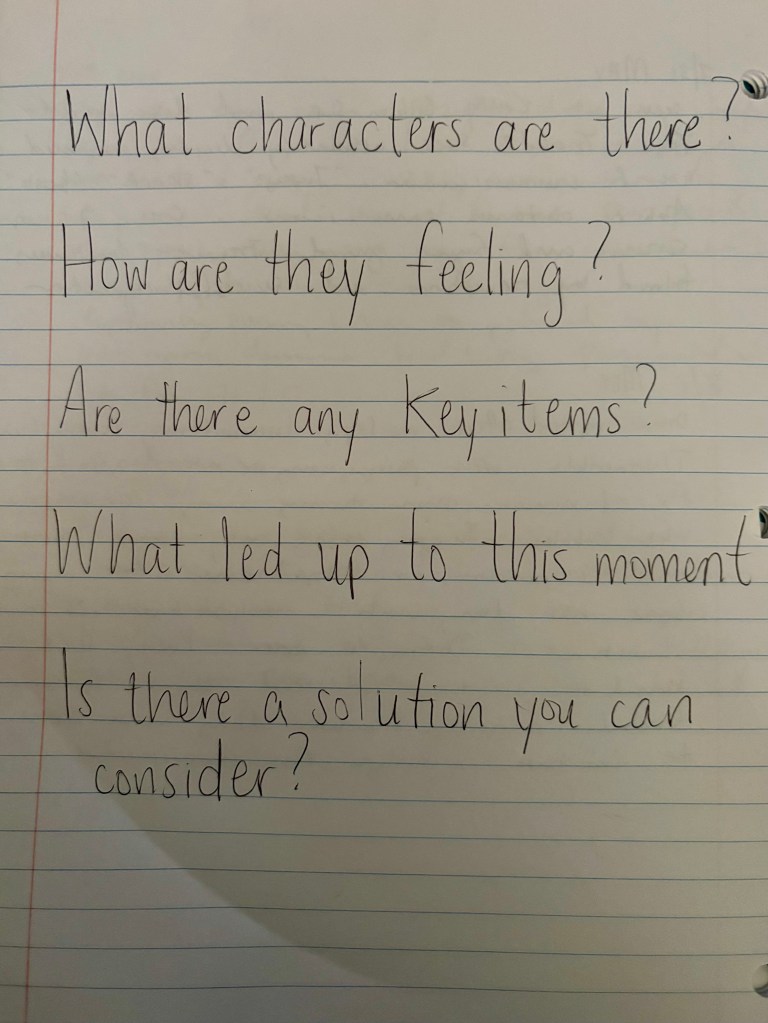
Munch surprisingly didn’t need much prompting to create these:
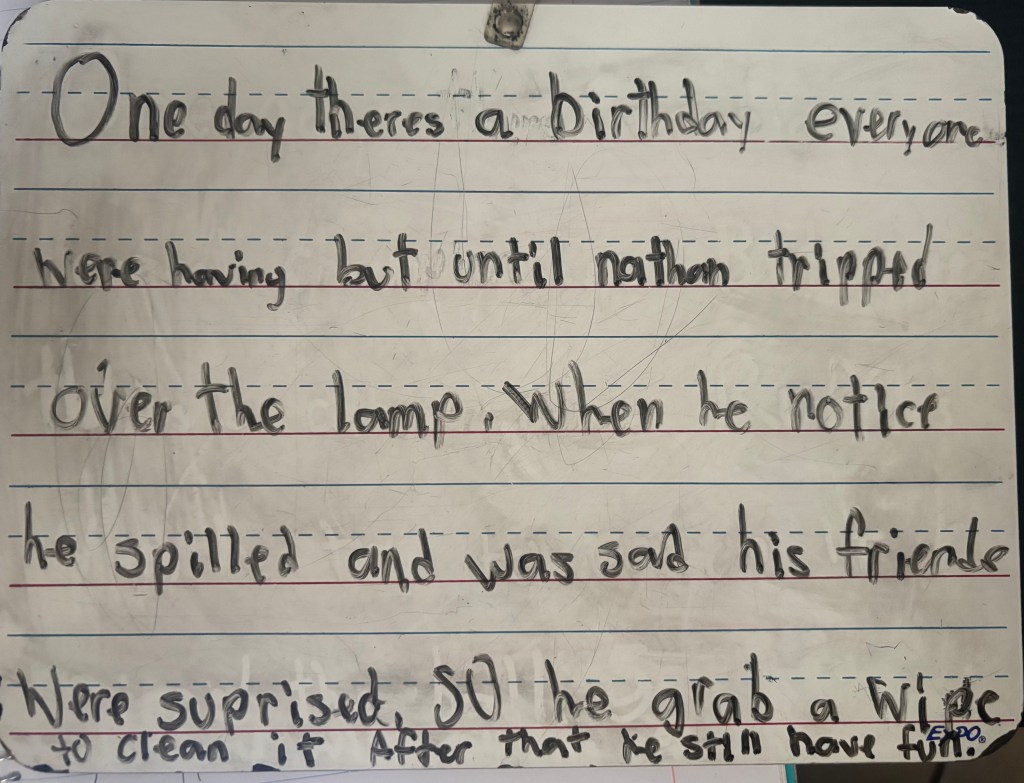
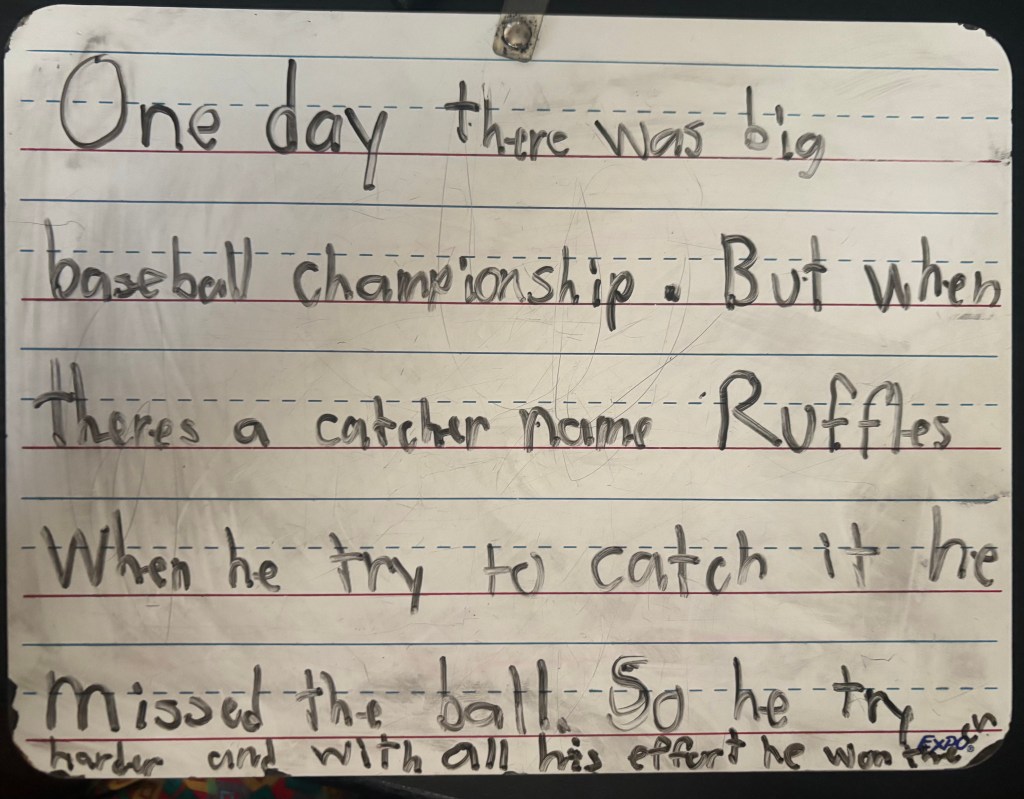
See if you can match the picture to the story:

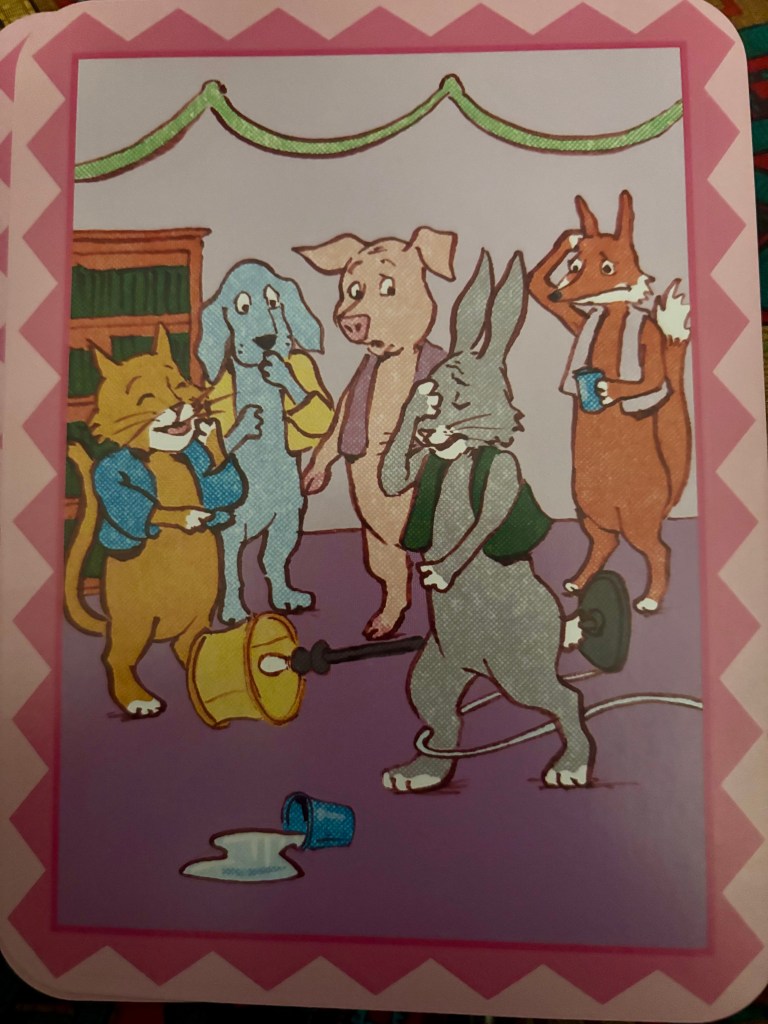
These situation pictures are from a conversation card deck.
One of my favorite tools for identifying emotions, naming, finding problems, forming sentences, etc with this population.
An additive includes using keywords, which I’ve pulled from a separate deck of individual words and using keywords in the story. Eg. chord, bingo, shame
There’s no reason for rhyme nor reason between the words – the more abstract, the more creative thinking the child is encouraged to use.
Another additive can be retelling a known story or using the picture to create a new ending or quality to the story.
You always know I’m a few clicks away if you resonate with or want to know more about this therapy technique. Happy Treating!
 Tattletales Speech and Early Intervention Services